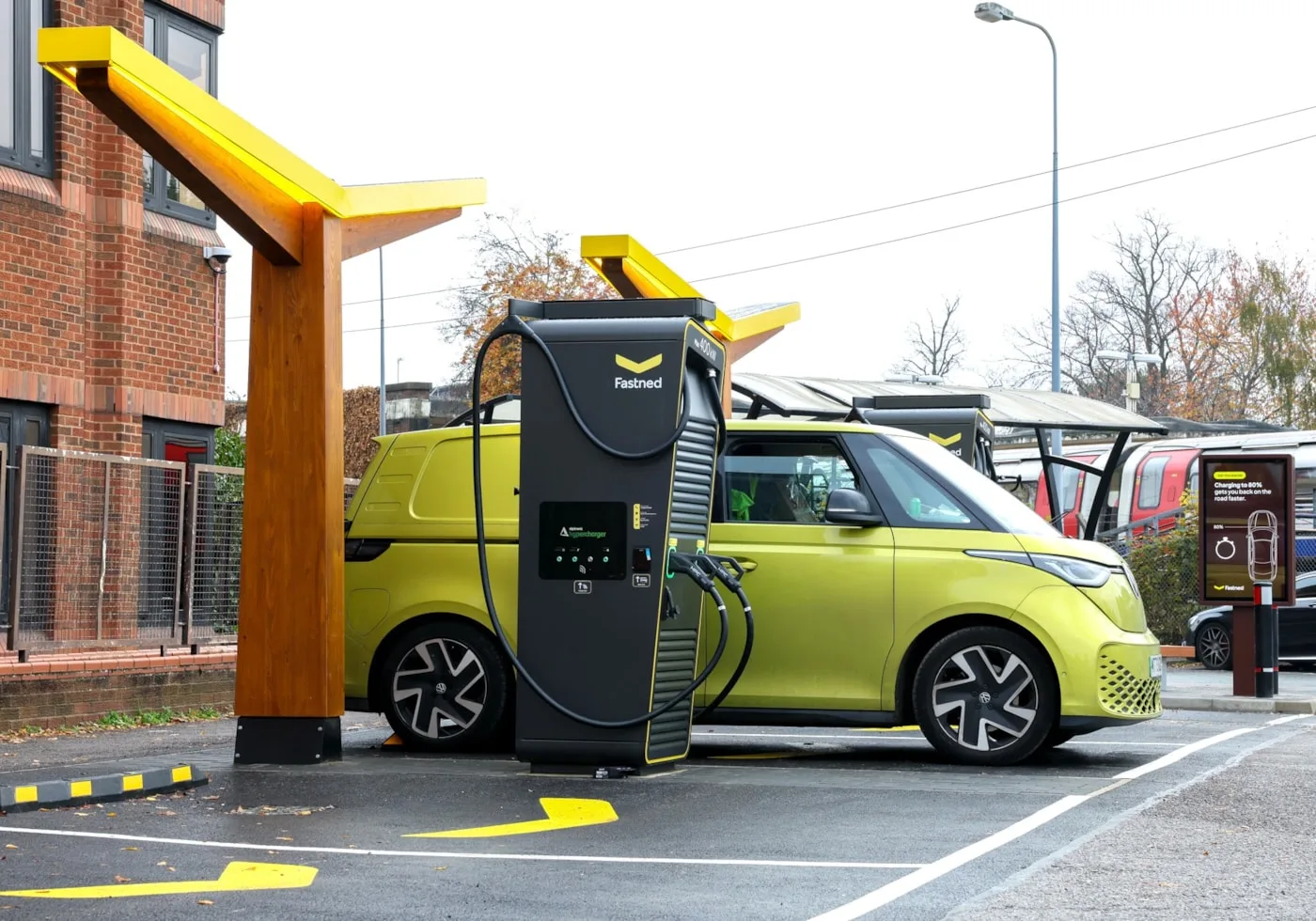

TfL and Fastned have opened a second 400kW EV charging hub, at East Finchley, with five more due to start building in 2027. None of them is in Southwark.
Drivers in Dulwich, Peckham and Camberwell will have to travel to the other side of London for the ultra-rapid chargers that Transport for London’s property arm is building with the operator Fastned. The pair opened their second hub this month, at East Finchley Underground station, and have named five more sites where construction is due to begin in 2027: Dagenham Dock, Hillingdon, Hounslow East, Redbridge and West Barking. None is in Southwark.
The joint venture between Fastned and Places for London says it wants up to 25 hubs across the capital by 2030, but the release does not say where the others will be.
Overview
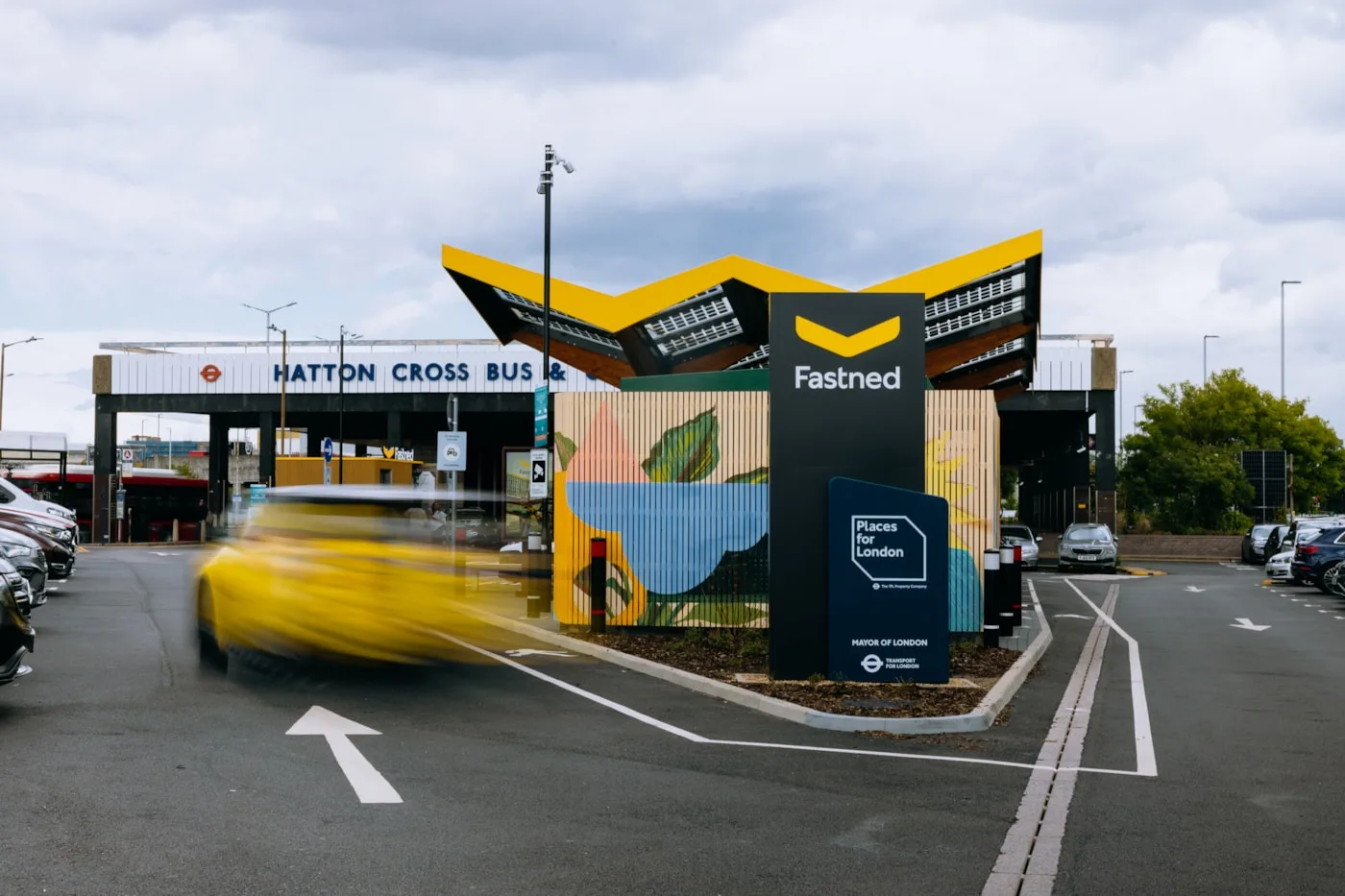
- Open: Hatton Cross near Heathrow, since April 2026, and East Finchley station car park on High Road, opened earlier this month.
- Speed: 400kW chargers, which TfL says can add up to 100 miles of range in five minutes to a compatible vehicle.
- 2027: building due to start at five sites with 66 bays between them; a 36-bay hub at Hanger Lane in Ealing is due to open in spring 2027.
- Southwark: no site named in this round.
- Aim: up to 25 hubs by 2030.
Why inner London is the case for them
The release leans on TfL’s Travel Demand Survey, which found that 93 per cent of households in inner London have no private off-street parking, compared with 64 per cent in outer London. For most homes in a borough like Southwark, that means no driveway to charge on overnight, and the venture says public hubs are meant to serve those residents along with commuters, taxi and private hire drivers and business fleets.
Our Dulwich parking guide covers Southwark’s permit charges, including the rate for electric cars.
Seb Dance, Deputy Mayor for Environment and Energy, said: “To tackle the climate crisis, clean up our air, and build a net-zero city, we must make switching to electric vehicles seamless for every Londoner. The Mayor’s goal is for London to have 40,000 EV chargers by 2030 and the incredible momentum achieved by Fastned and Places for London proves what can be achieved when bold ambition meets rapid delivery.
“From Hatton Cross to East Finchley, and with monumental sites like Hanger Lane coming soon, this roll-out is vital for the thousands of drivers who don’t have access to a driveway. Together, we are hitting our stride and ensuring London remains at the global forefront of the green transport revolution as we continue to build a fairer and greener London for everyone.”
East Finchley and Hatton Cross
East Finchley’s eight bays are in the Northern line station’s car park. TfL says the hub went from planning consent to opening in eight months and is the venture’s first with Fastned’s yellow solar wings.
Every site, the release says, runs on 100 per cent renewable energy, with extra-wide bays, clear sightlines and lighting, round-the-clock multilingual support and fully accessible spaces built to British Standards Institution guidance.
In its first six months, the Hatton Cross hub supported more than 1.1 million zero-emission kilometres, according to TfL.
Tom Hurst, UK Country Director at Fastned, said: “We are building real momentum across London. In less than a year, we’ve proven that well-designed, ultra-rapid charging changes the game for drivers. With Hatton Cross answering a critical local demand, East Finchley now welcoming drivers, and our game-changing 36-bay Hanger Lane flagship taking shape, we’re showing what the future of urban charging looks like.
“Securing planning for key sites in Barking and Dagenham, Hillingdon and Redbridge gives us the springboard to accelerate even faster. Drivers want fast, reliable, safe charging that fits naturally into their day. Alongside Places for London, we are proud to be turning that vision into a reality across every corner of the capital.”
The pipeline
The venture has nine planning consents and is waiting on three more decisions. Building at the five sites below is due to start in 2027, which would bring the network to eight sites and 122 bays:
- Dagenham Dock: 16 bays and a retail unit.
- Hillingdon: 12 bays in the station car park.
- Hounslow East: 8 bays in the station car park.
- Redbridge: 12 bays in the station car park, just off the A406.
- West Barking: 18 bays and a retail unit.
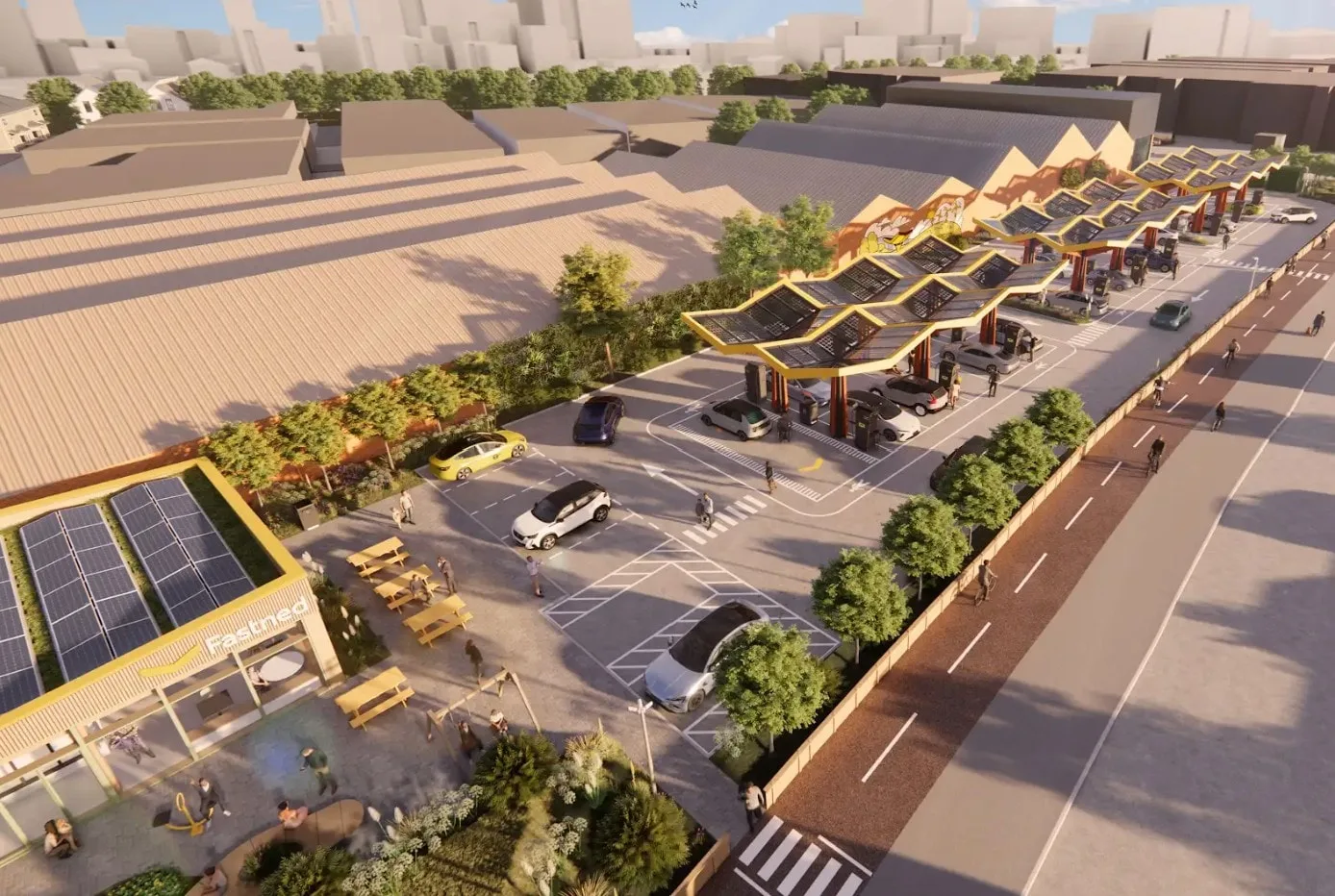
Work has already started at Hanger Lane, on unused land in the Park Royal industrial estate, where fully electric cement mixers are on site. Due to open in spring 2027 with 36 bays, a shop, toilets and outdoor seating, it is set to be London’s largest ultra-rapid EV charging destination.
John Colgan, Electric Vehicle Charging Hubs Programme Manager at Places for London, said: “Seeing our joint venture with Fastned move at such a pace is hugely exciting. By unlocking TfL’s estate, we are transforming accessible land into critical, sustainable infrastructure where the capital needs it most.
“With two hubs live, work progressing rapidly at Hanger Lane, as well as a robust pipeline moving smoothly through planning, we are setting a benchmark for world-class EV infrastructure. Every new bay we deliver helps decarbonise our transport network, supports local air quality, and generates revenue to be reinvested directly back into London’s transport system.”
Charging across London
- More than 29,500 public charging devices, about a third of the UK total, including more than 2,000 rapid or ultra-rapid ones.
- Between 860,000 and 1,049,000 electric vehicles projected on London’s roads by 2030, 29 to 36 per cent of the car and van fleet.
- Around 43,000 to 51,000 more charge points expected to be needed, several thousand of them 50kW or faster.
- A possible cut of 1.5 million to 2.6 million tonnes a year in London’s carbon emissions by 2030 from more electric vehicles and the charging to support them, on TfL’s estimate.
TfL says it is also working with other charge point operators on more rapid and ultra-rapid bays across its estate. Places for London’s recent report on its wider property schemes also named no scheme in Dulwich.
Source: Transport for London press office.
Have your say